

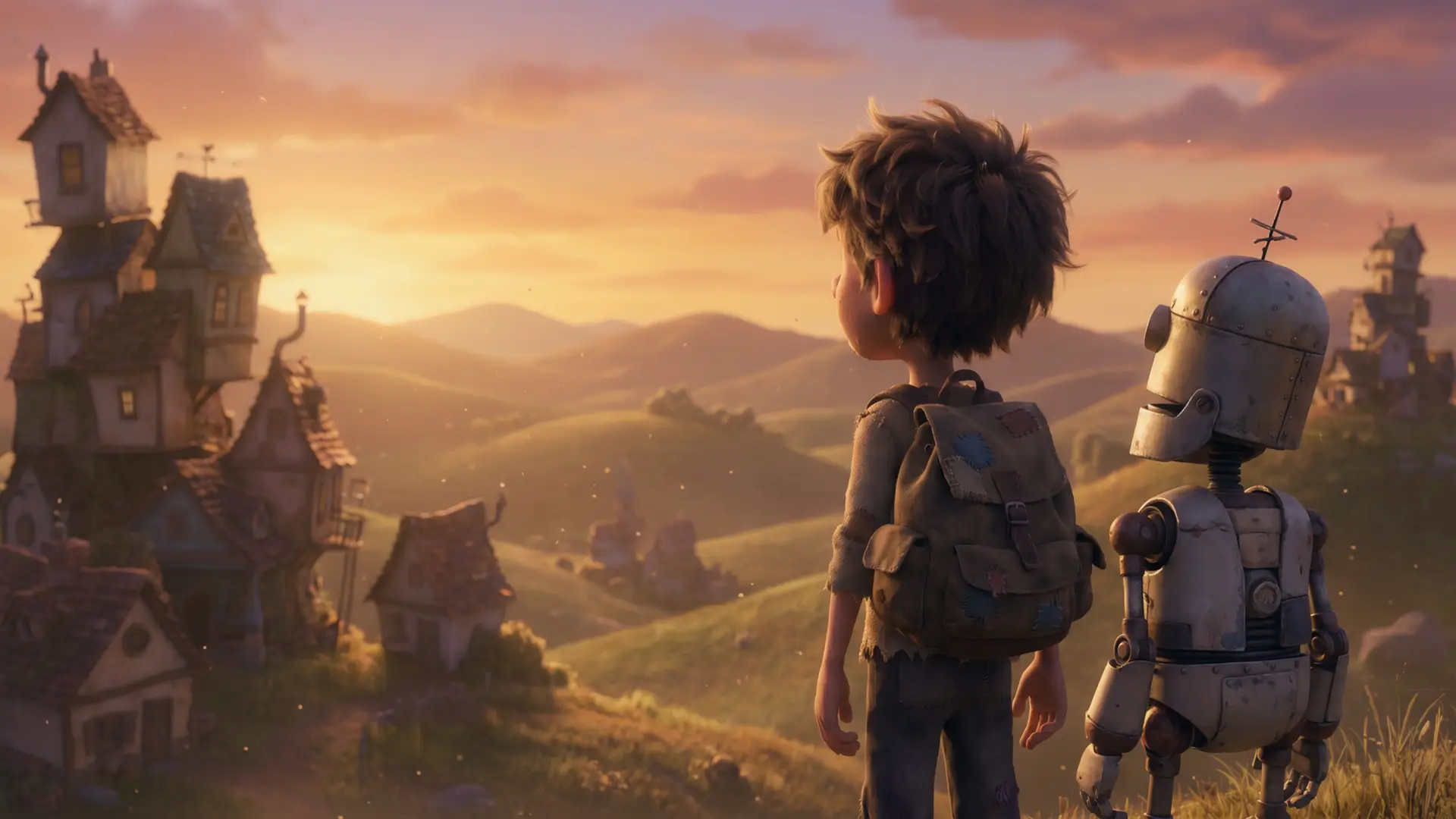
A finished animated film looks easy. It plays for a minute, everything moves smoothly, and you’d think someone just sat down and made it. They didn’t. Most of the work is stuff you never see, like the scenes that got cut, the script that was rewritten three times, the colour that was changed on day nine.
Brands use animation for all sorts of things. A new business wants to introduce itself, a company has a product that’s hard to explain, or an older brand wants to look less dated. Whatever the reason, the film only holds together if each stage builds on the one before it. Here’s how that goes.
At Kalpnk, we start every project by asking what the brand wants people to understand. The look comes later.
How Is an Animated Brand Film Produced?
1. The Brief
Before anyone draws a frame, someone has to decide what the film is for. A launch? Explaining a product? Telling new customers who you are?
Sounds obvious, but this is the step brands skip most. Say a software company has a product nobody’s heard of. They make a beautiful film with glowing graphics, everyone claps, and then viewers still can’t say what the software does. That’s a failed film, however nice it looks.
So the brief fixes three things: what you’re saying, who you’re saying it to, and what you want them to do next. It also covers the dull practical bits, like where the video will run, how long it should be, the budget and the deadline. A good brief doesn’t box the creative team in. It just shows them where the walls are.
2. Scriptwriting
Most brands want to say everything. Features, history, awards, the founder’s story. The script’s job is to decide what can be left out.
Take a logistics company. It could list twenty services, and viewers would forget all of them. Or the film could follow one parcel from the moment it’s picked up to the moment it lands on a doorstep. Same company, same strengths, but now there’s a story to hold onto.
A script usually has an opening hook, one main message, a couple of supporting points and a closing action. Keep the words few, because the visuals will carry part of the load.
If you’re comparing the best AI video production company in Bangalore, ask about their scripting before anything else. Style and tools can be sorted out later. A weak script can’t be rescued by good animation.
3. Storyboarding
Once the script is approved, it turns into pictures. A storyboard is a set of rough frames showing what the viewer will see, scene by scene.
Say you’re planning a 60-second film. The first quarter or so sets up the problem your audience has. The middle stretch introduces your solution and why it matters. The last bit repeats the message and tells people what to do next. That’s one way to split it, not the only way, but it shows why timing matters.
The real value of a storyboard is that it exposes problems cheaply. A confusing transition or a scene that goes nowhere is a two-minute fix on paper. After the animation is built, the same fix can take days.
4. Visual Development
Now the film needs a look. Should it feel precise and technical, warm and friendly, or bold and a bit odd?
This is where colours, typography, character designs and illustration style get decided. A bank might want clean shapes and calm movement. A kids’ learning app would probably want bright colours and characters with lots of expression. Neither is better. What matters is whether it fits the brand.
Any good animation video maker in India should be able to take your existing brand guidelines and turn them into a visual style that holds up across the whole film. When that works, the film feels like one piece. When it doesn’t, you get scenes that look like they came from different projects.
5. Animation and AI
This is where the storyboard finally starts moving. What kind of animation you use depends on the idea. Some films want flat 2D, some need a 3D space, and a lot of explainers are really just motion graphics with a good voice on top.
AI can sit somewhere in this, mostly for quick experiments. Want to see how a scene looks in three different colour moods before choosing one? That’s a good use. But you shouldn’t let a tool decide the story. If a product demo has to show how a tiny part works, the movement has to be exact, and no shortcut helps there. An emotional
film is the opposite: it lives or dies on a character’s face and on how long you hold a shot.
Looking at an animated video company in Hyderabad? Ask to watch a full minute of their work, not a ten-second reel. A reel hides inconsistency. A full minute shows whether the characters and colours still look the same at the end.
6. Sound Design and Voiceover
Watch any animation on mute and it feels strangely flat. Sound is half the film.
The voiceover tells people what to think about. Music gives the mood, though it only works if it stays under the narrator. I’ve seen films where the track was so loud that nobody heard the key line. A small effect, like a soft click when a button is pressed, does more than you’d expect, because it makes the screen feel real.
Also, voiceover changes the edit. A sentence that looked fine in the script can run too long once the scene is moving quickly, so someone has to cut it. That’s why sound belongs in the plan from the start, not at the end as an add-on.
7. Editing and Quality Checks
The final cut is where everything comes together. Pacing gets adjusted, transitions get cleaned up, audio gets balanced, and the film is checked against the original brief.
And this check should go beyond “does it look good?” Ask whether the message makes sense without needing extra explanation. Ask whether the brand appears at the right moments, whether the product details are correct, and whether the ending actually matches your campaign goal.
There’s a technical side too. If the film is going on several platforms, you’ll need different aspect ratios, resolutions and caption positions. For animated video production services in Mumbai, or anywhere else, agree on these deliverables early. Finding out about a missing vertical version on delivery day is a bad afternoon.
8. Delivery
Finishing the film isn’t quite the end. Now it has to reach people, and this is where a lot of brands trip up.
Your main version will probably live on the website or play at a launch. The shorter cuts go to social and ads, and those need their own captions and sizes. Most people watch with the sound off, so a cut without captions loses half its audience before it starts. And whichever version it is, don’t forget to tell viewers what to do next.
Planning for an international audience? Then an AI video company in Los Angeles could be on your list too. Honestly, the location matters less than whether they get your audience and deliver on time.
Where Kalpnk Fits In
We try to treat an animated film as one project, not four separate jobs. If the script team, the animators and the editor don’t share the same idea, you can feel it on screen. The film starts to look stitched together.It also helps you as the client. When every stage ties back to the same idea, it’s much easier to tell whether a creative choice is working or not.
Final Thoughts
No animated film is saved by one clever trick. When one turns out well, it’s usually because nobody rushed the unglamorous parts: the brief, the script, the storyboard. Those are the stages that decide whether the animation at the end has anything worth saying.
So if you’re planning one, spend your time up front. Get clear on what you want people to remember, and the rest becomes far easier.
Got a story for your brand? Come talk to us at Kalpanik. Tell us what you do and who needs to hear it, and we’ll tell you honestly what kind of film makes sense.
Frequently Asked Questions
It depends on the length, how complex the visuals are and how fast approvals come back. A simple one can be done in a few weeks. A complex one can run for months, and slow feedback is usually the reason.
It can help with some parts of the job. Whether it’s the right choice depends on what the film needs, how consistent it has to look and the quality you expect.
Length is the big one. After that: how much scripting is needed, the illustration style, character design, how complex the animation is, voiceover, sound and how many revision rounds you want.
Your goal, your audience and the one thing you want them to remember. Bring brand guidelines and a few reference videos you like too, plus a rough idea of deliverables and your deadline.